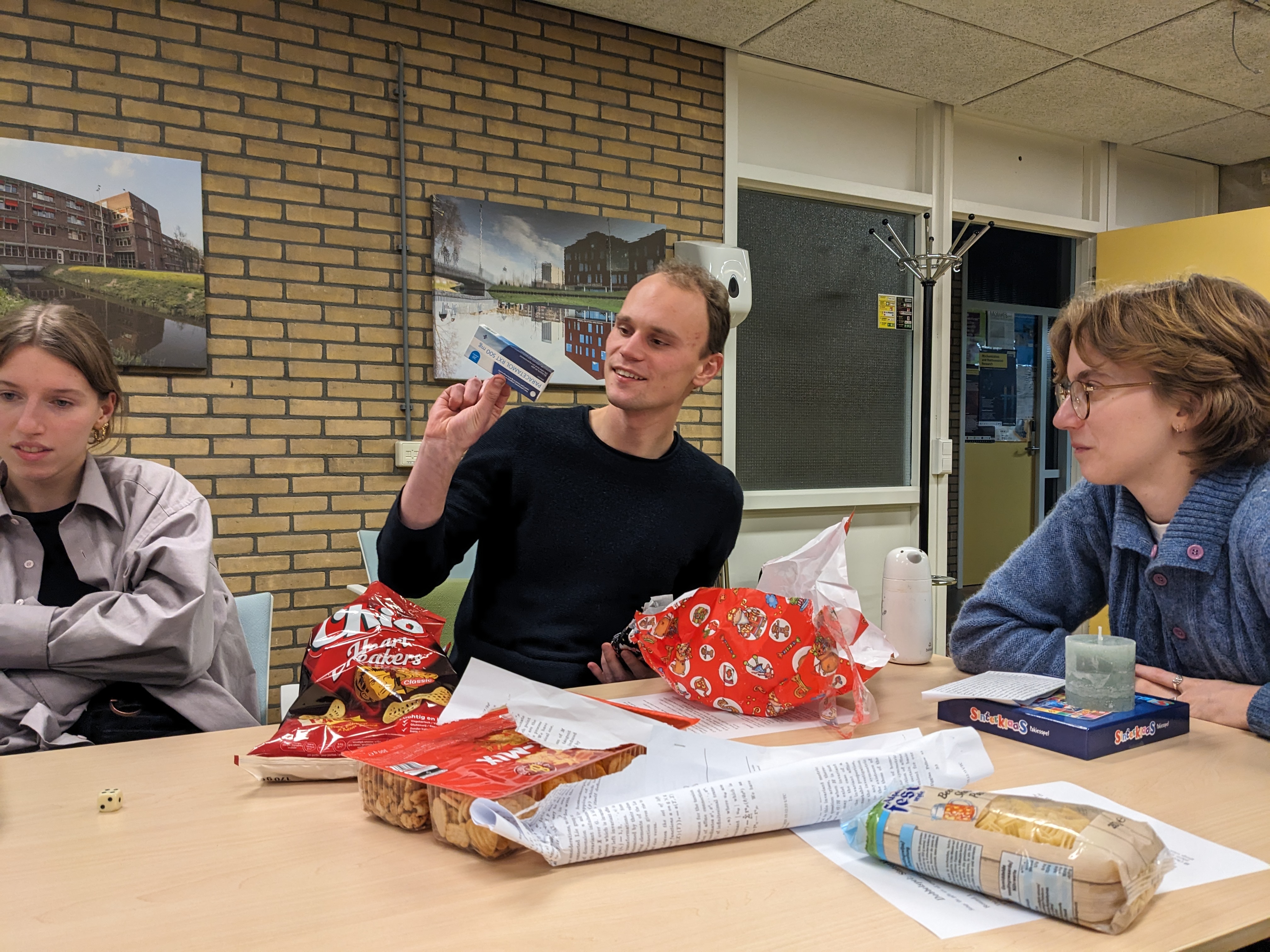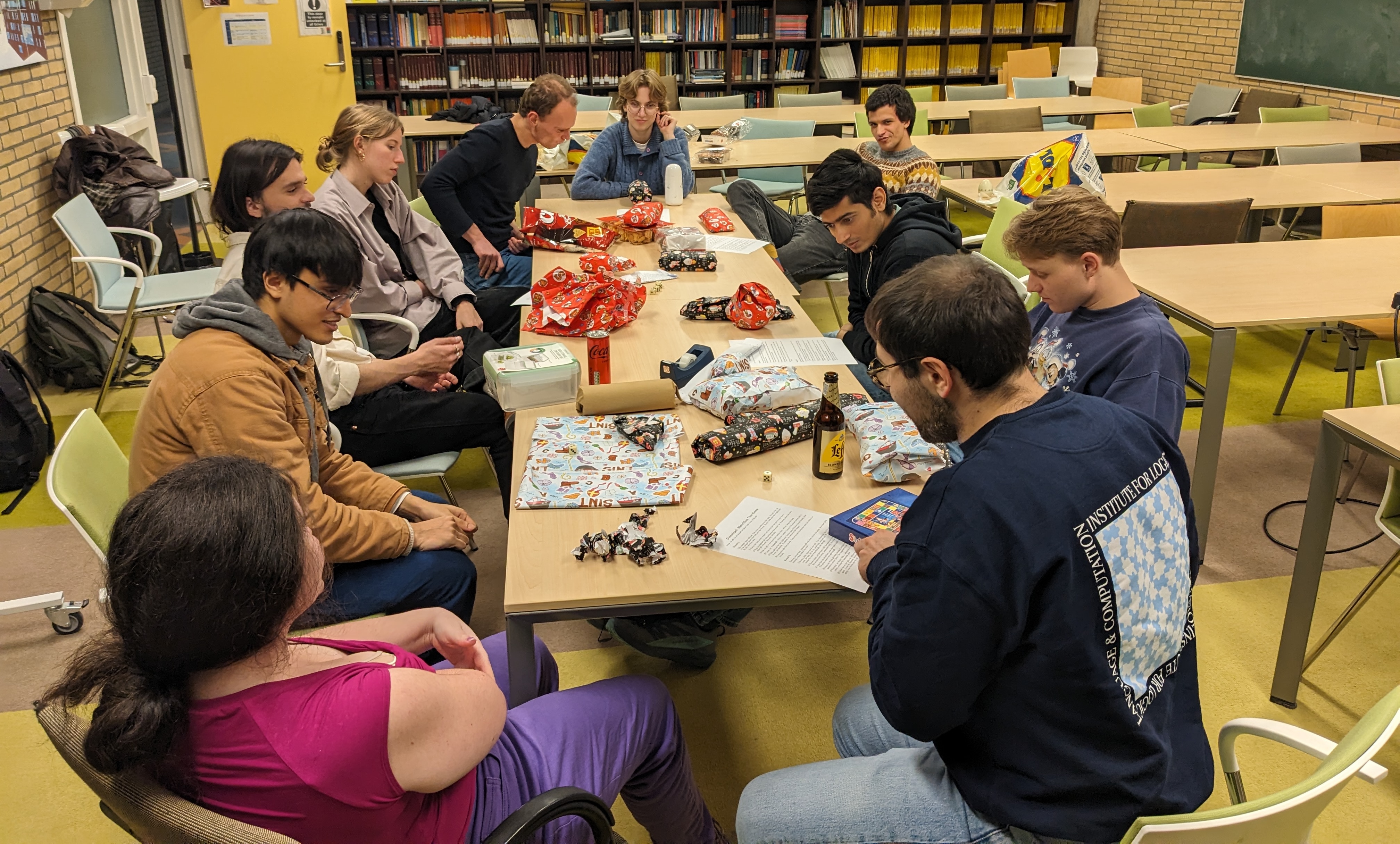
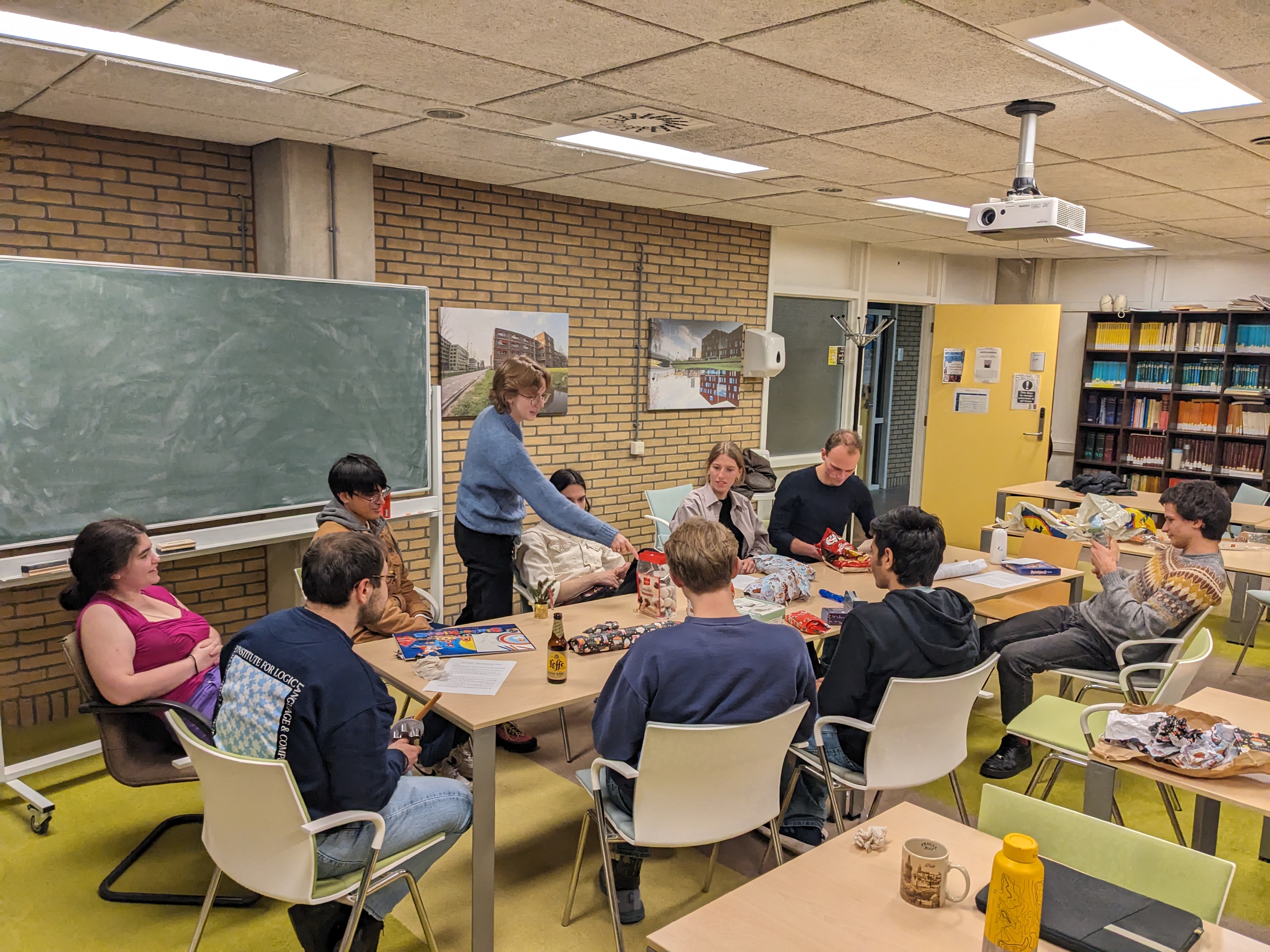
To celebrate Sinterklaas we played a MoL-version of Dobbelspel, a Dutch dice-game played among friends. The game is played in two rounds. We start with the gifts are all wrapped and placed in the centre of the table.
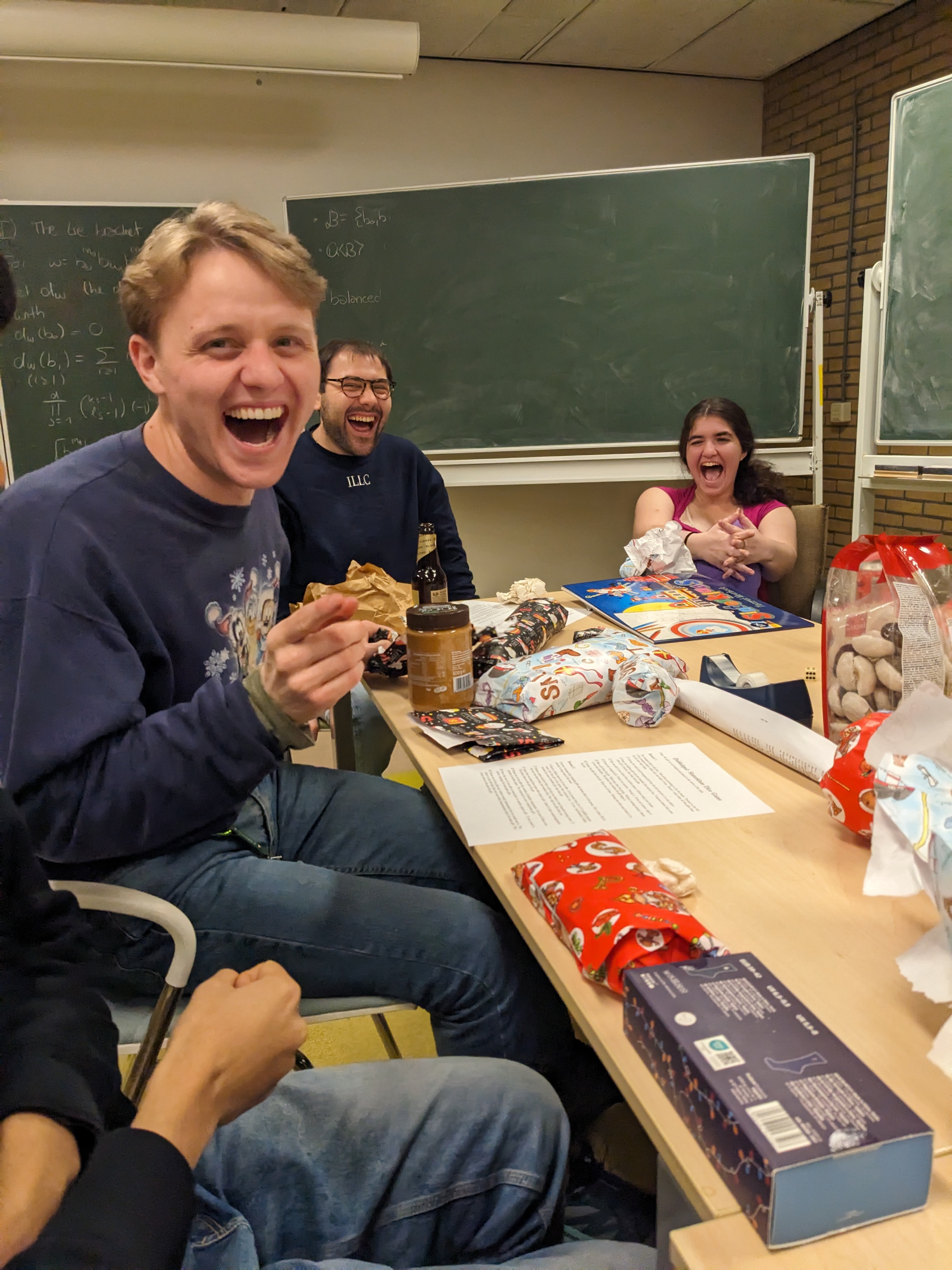
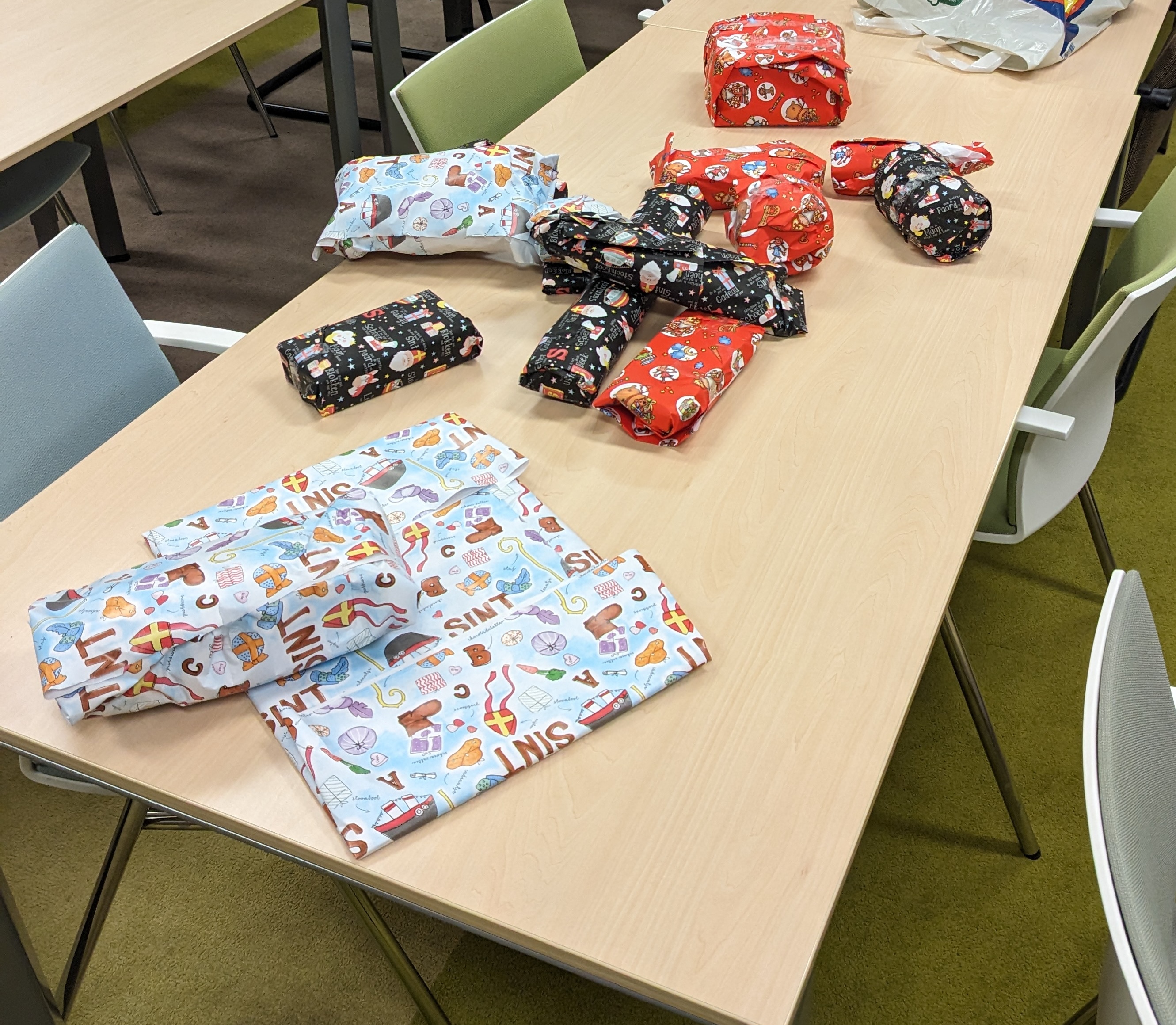
Round 1
The youngest player rolls first. Take action according to the die result. Proceed to the left if the youngest player rolled odd, and right if even. Round 1 ends when all the gifts from the pile have been taken.
- If you roll a 1, unwrap the most poorly-wrapped gift from the pile and give it to any player.
- If you roll a 2, swap your lightest gift with the heaviest that anyone has. If anyone shows that some other gift is heavier, they keep both gifts.
- If you roll a 3, take one gift of your choice from another player, without using your hands.
- If you roll a 4, choose any wrapped gift. Predict its contents. Unwrap it. If you are correct, take it.
- If you roll a 5, take a gift from the pile. Walk away from the group. Without turning around, throw it over your shoulder. The person who catches the gift keeps it.
- If you roll a 6, unwrap two gifts from the pile. Keep one of them. Rewrap the other and return it to the pile.
Round 2
Everyone unwraps their remaining gifts and shows them to the group. Set a timer (30–45 minutes) to keep track of the round.
- If you roll a 1, recite a Haiku about one of your gifts. If you deviate from the 5-7-5 syllable requirement, give that gift to the person who corrected you. If your (well-formed) haiku includes the name of another gift, take that gift.
- If you roll a 2, choose a player and give them a gift that you think is their favourite among yours. If they say you chose wrong (and explain why), they take two gifts from you.
- If you roll a 3, argue that you should have some other player’s gift. Listen to their counterargument. The group votes on who gets the gift.
- If you roll a 4, choose one of your gifts that consists of multiple components. Give one of those components to another player. The component is now a stand-alone gift.
- If you roll a 5, prove that one of your gifts is isomorphic to another player’s gift. If your proof is correct, exchange the isomorphic gifts.
- If you roll a 6, choose one of your gifts and, without words, demonstrate how you would use it. The player to your left does their own non-verbal demonstration about the same gift. The group votes on who gets the gift.